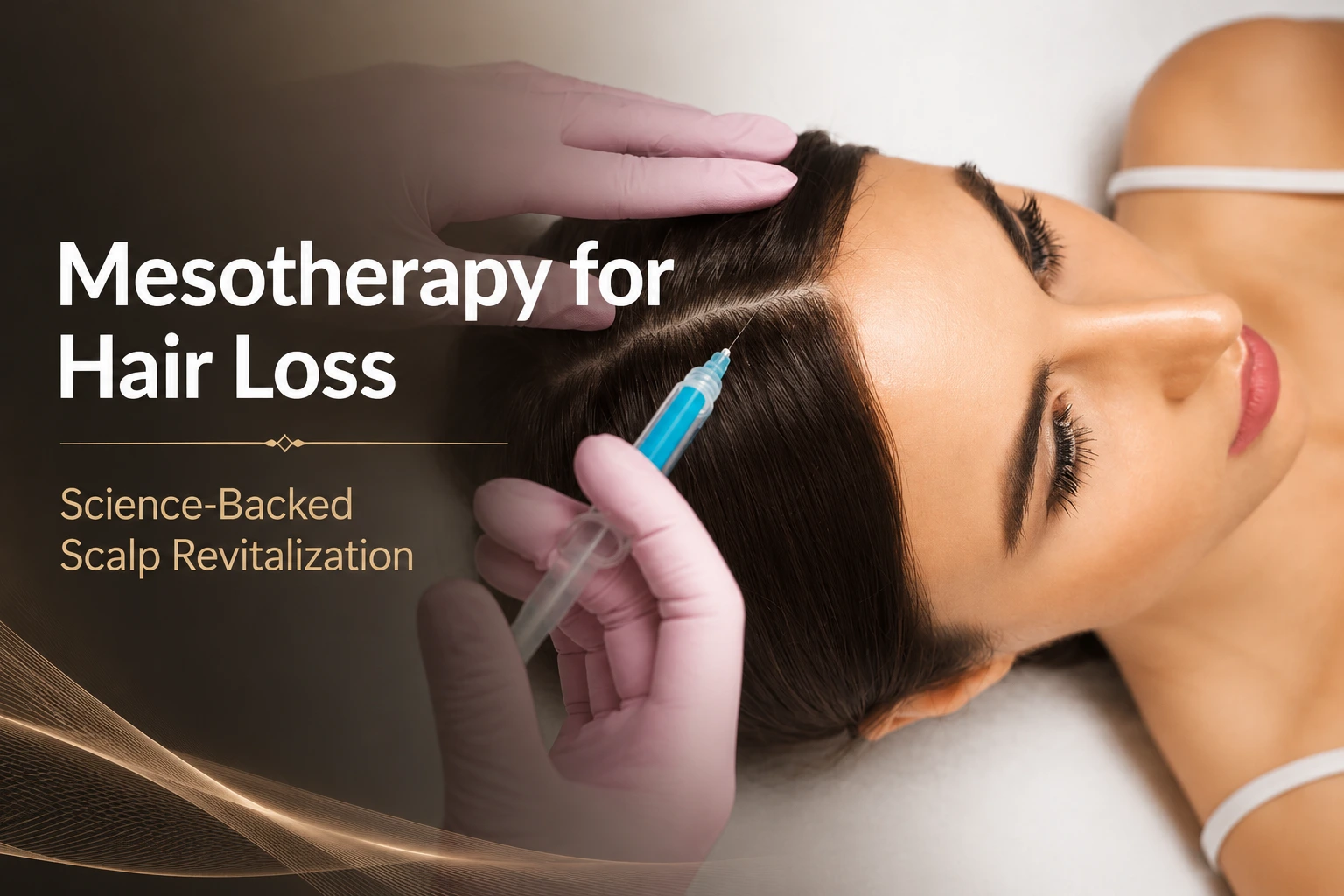
Mesotherapy for Hair Loss: Science-Backed Scalp Revitalization
Hair loss affects millions globally, yet many conventional treatments deliver limited results due to poor delivery mechanisms and systemic side effects. Mesotherapy represents a precision-based approach that bypasses these limitations by directly infusing active compounds into the scalp's mesodermal layer, where hair follicles reside and respond to targeted nutrient support.
Understanding Mesotherapy: A Targeted Approach to Hair Restoration
Mesotherapy is a minimally invasive technique that delivers carefully formulated compounds directly into the middle skin layer (dermis and subcutaneous tissue) using fine needles or micro-injection devices. Unlike oral medications or topical applications, this approach creates a therapeutic reservoir of active ingredients exactly where hair follicles need them most.
The concept originated in France in the 1950s and has evolved significantly with modern dermatology practices. For hair loss, mesotherapy functions by:
- Stimulating dormant follicles through growth factor delivery
- Improving scalp microcirculation and oxygen delivery
- Reducing inflammatory markers that contribute to follicle miniaturization
- Providing essential micronutrients directly to the follicular unit
- Supporting the hair growth cycle (anagen phase) extension
At Éterne Clinic in Powai, we employ advanced micro-injection techniques that minimize trauma while maximizing therapeutic benefit. The precision nature of mesotherapy distinguishes it fundamentally from traditional hair loss interventions, offering patients a middle ground between conservative topical treatments and more aggressive surgical options.
The Science Behind Follicular Nutrient Delivery
Follicular health depends on a dynamic scalp microenvironment
Mesotherapy exploits an elegant biological principle: targeted local delivery achieves higher therapeutic concentrations in the treatment area with minimal systemic absorption. This pharmacokinetic advantage means that active compounds can work more effectively at lower doses.
Research into mesotherapy mechanisms reveals several pathways:
Growth Factor Stimulation:Delivery of vascular endothelial growth factor (VEGF), fibroblast growth factor (FGF), and insulin-like growth factor (IGF-1) directly to follicular units enhances proliferation of keratinocytes and melanocytes within the follicle.
Microcirculation Enhancement:Improved blood flow to the scalp increases oxygen and nutrient supply while clearing metabolic waste products that accumulate in chronically inflamed follicles.
Anti-inflammatory Effects:Local delivery of anti-inflammatory agents and antioxidants reduces the oxidative stress and immune activation implicated in androgenetic alopecia and telogen effluvium.
Extracellular Matrix Remodeling:Mesotherapy compounds support collagen and elastin production, creating a healthier tissue environment that supports sustained follicular activity.
This multi-pathway approach explains why mesotherapy often produces results when single-mechanism treatments plateau.
What's in the Formulation: Active Ingredients Explained
Mesotherapy formulations for hair loss are customized based on individual scalp analysis and the underlying cause of hair loss. However, evidence-supported ingredients consistently include:
Amino Acids and Peptides:Building blocks for hair structure (keratin, collagen) and signaling molecules that communicate growth signals to follicles. Compounds like acetyl-tetrapeptide-3 demonstrate follicle-stimulating properties.
Micronutrients:Zinc, copper, iron, and selenium are cofactors in enzymatic reactions essential for hair production. Deficiency in these minerals correlates with hair loss, and direct scalp delivery ensures follicular availability.
Antioxidants:Vitamins C and E, glutathione, and alpha-lipoic acid combat oxidative stress that damages follicular stem cells and accelerates miniaturization.
Growth Factors and Cytokines:Platelet-derived growth factor (PDGF), transforming growth factor (TGF), and other signaling molecules activate follicular stem cells and extend the anagen (growth) phase.
Hyaluronic Acid:Enhances hydration in the follicular microenvironment and supports tissue elasticity, improving overall scalp health.
Plant-Derived Compounds:Botanical extracts with anti-inflammatory and antioxidant properties, selected based on clinical evidence and bioavailability.
At Éterne Clinic, formulations are pharmaceutical-grade and selected based on the latest dermatological research, ensuring safety and efficacy while avoiding unproven or potentially harmful compounds.
The Treatment Protocol: What to Expect During Sessions
A standard mesotherapy session for hair loss follows this evidence-based protocol:
Pre-Treatment Assessment:Scalp analysis including follicle density mapping, pattern evaluation, and identification of inflammatory markers guides treatment planning.
Anesthesia:Topical numbing cream applied 15-20 minutes before treatment minimizes discomfort during needle insertion.
Injection Technique:Using fine 30-32 gauge needles, the practitioner creates a pattern of micro-injections across affected areas, spacing them to ensure comprehensive coverage and even distribution.
Formulation Delivery:The customized mesotherapy solution is injected into the mesodermal layer at precise depths (2-4mm), creating small therapeutic depots.
Post-Injection Care:Gentle scalp massage may be applied to enhance distribution. Most sessions take 20-40 minutes depending on scalp area.
Recovery:Patients experience minimal downtime. Mild redness and tenderness typically resolve within 24-48 hours. Normal hair washing and styling can resume after 24 hours.
Session Frequency:: Initial phase typically involves 6-8 sessions spaced 2-4 weeks apart. Maintenance treatments follow every 1-3 months depending on response and underlying condition.
Progression of results correlates with the hair growth cycle; patients often notice initial improvement after sessions 3-4, with continued enhancement as multiple follicle cycles complete their response.
Clinical Evidence: Efficacy and Realistic Outcomes
Mesotherapy for hair loss has been evaluated in multiple peer-reviewed studies, with results supporting its efficacy when appropriately indicated:
Research demonstrates:
- Improved hair density (10-25% increase in anagen hairs in responders)
- Increased hair shaft diameter and strength
- Reduction in shedding and stabilization of hair loss progression
- Enhanced response when combined with other modalities (minoxidil, finasteride, PRP)
However, evidence-based medicine requires acknowledging important nuances:
- Individual variation is significant:Underlying causes of hair loss (androgenetic, telogen effluvium, alopecia areata) respond differently to mesotherapy
- Follicle viability matters:Results are better when follicles are miniaturized but retain stem cell activity, versus completely dormant or scarred
- Combination protocols outperform monotherapy:Mesotherapy typically shows superior outcomes when integrated with other evidence-based treatments
- Long-term maintenance is necessary:Stopping treatment eventually leads to regression, reflecting the chronic nature of most hair loss conditions
These findings reflect realistic, clinically meaningful outcomes rather than miraculous transformations—the hallmark of ethical aesthetic dermatology.
Ideal Candidates: Who Benefits Most from Scalp Mesotherapy
Mesotherapy shows greatest efficacy in specific patient presentations:
Best-suited candidates:
- Early-to-moderate androgenetic alopecia (genetic pattern hair loss)
- Telogen effluvium (stress-induced or post-procedure shedding)
- Follicles that are miniaturized but still producing visible hair
- Patients seeking to enhance results from medical therapies
- Those desiring non-surgical intervention with minimal downtime
- Individuals with good overall scalp health and circulation
Less ideal scenarios:
- Complete scarring alopecia (follicular destruction)
- Advanced androgenetic alopecia with extensive denudation
- Severe follicle miniaturization in late-stage pattern hair loss
- Patients unable to commit to maintenance protocols
- Uncontrolled inflammatory scalp conditions
A comprehensive scalp assessment by a dermatologist is essential to determine candidacy and establish realistic outcome expectations.
Integration with Comprehensive Hair Restoration Strategies
The most scientifically supported approach to comprehensive hair restoration strategies involves multimodal treatment protocols
- With pharmacological therapy: Mesotherapy enhances and potentially reduces systemic side effects of minoxidil or finasteride by delivering complementary compounds locally
- With PRP and regenerative medicine: Combined mesotherapy and platelet-rich plasma protocols leverage synergistic growth factor delivery
- With laser and light therapies: Low-level laser therapy (LLLT) increases microcirculation, potentially enhancing mesotherapy compound absorption
- With lifestyle optimization: Nutritional support, stress management, and scalp care protocols amplify mesotherapy benefits
- With future interventions: Mesotherapy can be safely sequenced with future hair transplantation if progression necessitates surgical intervention
This comprehensive, evidence-driven approach aligns with contemporary dermatology standards and maximizes the probability of meaningful improvement.
Frequently Asked Questions (FAQs)
Schedule a comprehensive hair assessment at Éterne Clinic in Powai to determine if mesotherapy aligns with your restoration goals. Our dermatologists create personalized protocols based on detailed scalp analysis and your specific pattern of hair loss.
The information provided is for educational purposes and does not constitute medical advice. Individual results from mesotherapy treatments vary based on multiple factors including the underlying cause of hair loss, treatment adherence, and genetic predisposition. A thorough consultation with a qualified dermatologist is essential to determine candidacy and establish realistic expectations. Mesotherapy is not suitable for all types of hair loss, and outcomes cannot be guaranteed. This content does not replace professional medical evaluation or create a physician-patient relationship.