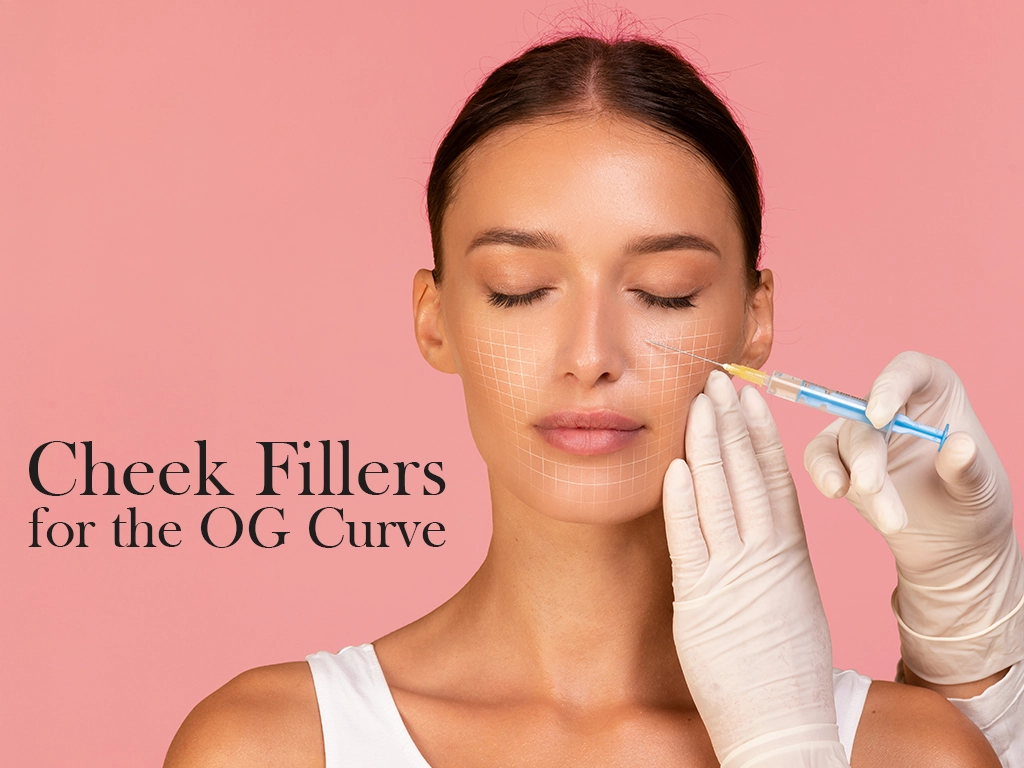
Cheek Fillers for the OG Curve: How High Cheekbones Create a Lifted, Model-Like Face
Cheek fillers have quietly become the cornerstone of modern facial aesthetics.
Not because everyone wants dramatic cheekbones, but because the cheeks play a
central role in how youthful, fresh, and balanced a face looks. When done well,
cheek fillers don’t scream “filler”—they simply restore the OG curve, the soft,
natural contour seen in well-proportioned, model-like faces.
At The Éterne Clinic, Hiranandani Gardens, Powai, cheek filler treatments are
designed to enhance facial structure without altering identity, keeping results
elegant, natural, and legally safe.
Why Cheekbones Matter More Than You Think
The cheeks act as the architectural support of the face. They influence:
- Under-eye appearance
- Mid-face lift
- Nasolabial folds
- Jawline definition
- Overall facial harmony
When cheek support is lost—due to ageing, genetics, or weight loss—the face can appear tired, saggy, or flat even in young individuals.
This is why cheek fillers are often the starting point of facial rejuvenation.
What Is the OG Curve in Cheek Filler Aesthetics?
The OG (Original Geometry) Curve refers to the smooth, continuous contour running from the cheekbone into the mid-face and down toward the jawline. A well-defined OG curve:
- Reflects light beautifully
- Creates a natural lifting effect
- Gives the face a sculpted yet soft appearance
Loss of this curve is one of the earliest and most subtle signs of facial ageing.
What Are Cheek Fillers Made Of?
Cheek fillers use hyaluronic acid (HA)—a molecule naturally present in our skin that attracts water and provides support.
- Firm enough to provide lift
- Flexible enough to look natural
- Temporary and reversible
- Biocompatible when used appropriately
This makes them a safe and widely accepted option in aesthetic dermatology when performed by trained professionals.
Who Is a Good Candidate for Cheek Fillers?
Cheek fillers may be suitable if you:
- Have flat or underdeveloped cheekbones
- Notice early facial sagging
- Feel your face looks tired despite good skin
- Have hollowing after weight loss
- Want subtle contouring without surgery
Both men and women can benefit, though the technique and placement differ significantly.
Cheek Fillers: Men vs Women – Why Technique Matters
While the product may be the same, the aesthetic goal is different.
In women, cheek fillers aim to:
- Enhance softness and gentle lift
- Create a higher cheek peak
- Maintain femininity
In men, the focus is on:
- Broader, flatter cheek structure
- Sharper angles
- Structural strength without softness
This gender-specific planning is crucial for natural-looking results.
What Cheek Fillers Can (and Cannot) Do
Cheek fillers can:
- Restore lost volume
- Improve facial balance
- Lift the mid-face subtly
- Support the under-eye area
- Enhance overall facial harmony
Cheek fillers cannot:
- Replace surgical facelifts in advanced sagging
- Permanently stop ageing
- Fix skin quality issues alone
This is why proper consultation and expectation-setting are essential.
How Cheek Filler Treatment Is Planned at The Éterne Clinic
Every cheek filler treatment begins with:
- Detailed facial analysis
- Assessment of bone structure and fat pads
- Evaluation of facial proportions
- Conservative volume planning
The goal is structure first, volume second—avoiding the overfilled or “pillow face” look.
The procedure itself:
- Takes about 30–45 minutes
- Is performed with medical-grade asepsis
- Involves minimal downtime
- Shows immediate results that settle over 1–2 weeks
Safety, Longevity & Reversibility
From a legal and medical standpoint, it’s important patients understand:
- Cheek fillers are temporary, lasting 12–18 months on average
- Results vary based on metabolism, anatomy, and lifestyle
- Hyaluronic acid fillers are reversible if needed
- Overcorrection is avoidable with conservative dosing
No aesthetic treatment should be positioned as “permanent” or “risk-free”.
Why Cheek Fillers Are Often Preferred Over Surgery
For patients seeking:
- Subtle enhancement
- Minimal downtime
- No scars
- Adjustable outcomes
Cheek fillers offer a non-surgical alternative to cheek implants or facelifts in early to moderate ageing.
Final Word
Cheek fillers are not about chasing trends or copying celebrity faces. When done correctly, they restore the OG curve, support facial anatomy, and create a refreshed, lifted appearance that still looks like you.
At The Éterne Clinic, Powai, cheek filler treatments are guided by anatomy, restraint, and long-term facial harmony—because the best aesthetic work is the kind no one can pinpoint.