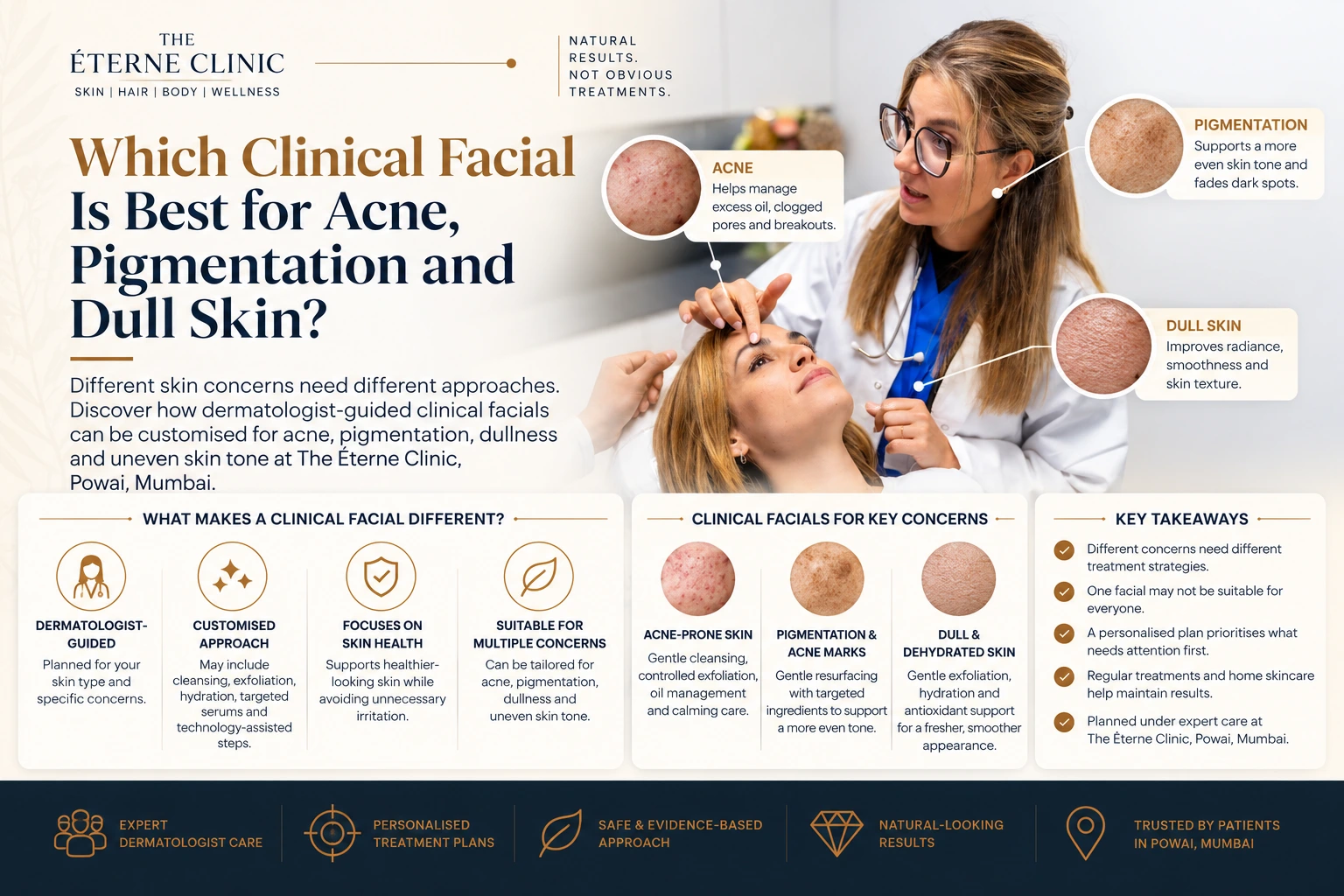
Which Clinical Facial Is Best for Acne, Pigmentation and Dull Skin?
If your skin looks dull, breaks out frequently, or develops stubborn pigmentation, booking a standard facial may not always be the answer.
Different skin concerns have different causes. Acne may involve excess oil, blocked pores, hormones, or inflammation. Pigmentation can be related to sun exposure, acne marks, melasma, or irritation. Dullness may come from dehydration, dead-cell buildup, lifestyle factors, or an impaired skin barrier.
That is why choosing the best clinical facial for your skin should start with understanding the concern—not simply picking the most popular treatment.
At The Éterne Clinic, Hiranandani Gardens, Powai, Mumbai, clinical facials are planned under the guidance of Dr. Ajara Sayyad, Board-Certified Dermatologist, Regenerative Medicine Specialist, and Medical Director of The Éterne Clinic.
What Makes a Clinical Facial Different?
A clinical facial is a dermatologist-guided treatment designed around your skin type and specific concerns.
Unlike a routine facial that may follow the same steps for everyone, a clinical facial in Mumbai may involve a customised combination of cleansing, controlled exfoliation, hydration, targeted serums, calming care, or technology-assisted steps.
The aim is not simply temporary brightness. It is to support healthier-looking skin while avoiding unnecessary irritation.
Learn more in our guide: Clinical Facial vs Ordinary Facial.
Which Clinical Facial Is Best for Acne-Prone Skin?
Acne-prone skin requires a cautious approach.
Aggressive scrubbing, prolonged steaming, or forceful extractions can sometimes worsen redness and inflammation. They may also increase the risk of post-inflammatory pigmentation, especially in Indian skin tones.
A clinical facial for acne may focus on:
- Gentle deep cleansing
- Controlled exfoliation
- Oil and congestion management
- Carefully performed extractions when appropriate
- Hydration without heavy occlusive products
- Barrier-supportive skincare
If acne is moderate, severe, painful, or recurrent, facials alone are unlikely to be enough. Dermatologist-prescribed treatment may be required to address the underlying condition.
Dr. Ajara Sayyad recommends treating active acne first rather than repeatedly trying to "clean out" the skin.
Explore our guide on Acne Scar Treatment in Mumbai.
What About Acne Marks and Pigmentation?
Pigmentation needs an accurate diagnosis because not all dark patches are the same.
Post-acne marks, sun-induced pigmentation, melasma, and irritation-related pigmentation can respond differently to treatment.
A facial for pigmentation in Mumbai may involve gentle resurfacing and ingredients selected to support more even-looking skin. Depending on the diagnosis, a broader treatment plan may also include prescription skincare, sun protection, chemical peels, Lumecca IPL, or Radianz Q-Switch Nd:YAG laser when medically appropriate.
The key is restraint. Over-exfoliating pigmented skin can trigger irritation and make pigmentation more noticeable.
Which Facial Works for Dull and Dehydrated Skin?
Dullness does not always mean the skin needs stronger exfoliation.
Sometimes the real issue is dehydration or a weakened skin barrier.
A clinical facial for dull skin may focus on gentle exfoliation, hydration, antioxidant support, and barrier repair. This can help improve the way light reflects from the skin, giving it a fresher and smoother appearance.
Patients with persistent dryness may also need changes to their home skincare routine, especially if they are using too many active ingredients.
In selected patients, clinical facials may be complemented by dermatologist-guided skin boosters containing hyaluronic acid, polynucleotides, or other appropriate formulations.
Can One Facial Treat Acne, Pigmentation and Dullness Together?
Sometimes, but not always.
A patient may have acne along with post-acne pigmentation and dehydrated skin. In such cases, the treatment needs to balance several goals without irritating the skin.
For example, performing aggressive exfoliation to target pigmentation may not be sensible if there is active inflammatory acne.
A dermatologist-guided plan prioritises what needs attention first and may treat different concerns gradually over multiple sessions.
This is often safer than trying to correct everything in one appointment.
How Often Should You Get a Clinical Facial?
The ideal frequency depends on your skin.
Some patients may benefit from treatments every few weeks, while others may need longer intervals.
Factors include:
- Acne activity
- Skin sensitivity
- Pigmentation type
- Existing skincare products
- Recent procedures
- Seasonal changes
- Individual treatment response
A good treatment schedule should be based on skin behaviour rather than a fixed monthly rule.
Learn more in our guide on Lunchtime Clinical Facials for Instant Glow.
Why Skin Assessment Matters
The same symptom can have very different causes.
Dull skin may reflect dehydration, sun damage, poor sleep, or excessive exfoliation. Pigmentation may be melasma, post-acne marks, or another condition. Acne can be influenced by hormones, skincare products, medications, and lifestyle.
At The Éterne Clinic, Powai, Dr. Ajara Sayyad evaluates these factors before recommending a dermatologist facial in Mumbai or combining it with another treatment.
The objective is to use only what your skin actually needs.
Explore our guide on Clinical Facials for Sensitive Skin.
Final Word
The best clinical facial is not necessarily the strongest, newest, or most expensive one.
For acne, the focus may be on reducing congestion and irritation. For pigmentation, controlled treatment and sun protection are essential. For dull or dehydrated skin, restoring hydration and skin-barrier health may matter more than aggressive exfoliation.
At The Éterne Clinic in Powai, Mumbai, clinical facials are personalised according to skin type, diagnosis, sensitivity, and treatment goals.
If you are unsure whether your concern needs a facial, medical skincare, or a combination of treatments, a dermatologist consultation can help create a clearer and safer plan.
Explore our related skin and aesthetic blogs:
- Clinical Facial vs Ordinary Facial: What's the Difference for Your Skin?
- Skin Boosters in Mumbai: The Secret to Hydrated, Glowing Skin
- Glow on the Go: Quick Lunchtime Facials for Instant Radiance
- 3 Clinical Facials for Sensitive Skin Type
- Top 3 Anti-Pollution Facials by Dermatologists
- How to Treat Acne Scars Effectively: Dermatologist-Approved Solutions in Mumbai
- Radianz Q-Switched Laser: Safe, Scientific Pigmentation & Tan Removal
Legal Disclaimer
This article is for general educational purposes only and does not replace medical consultation, diagnosis, or treatment. Treatment suitability and outcomes vary depending on skin type, underlying condition, genetics, lifestyle, medications, sun exposure, and adherence to post-care. Individual assessment by a qualified medical professional is recommended before undergoing any clinical facial or aesthetic procedure.